 Pin to Board
 My neighbor Marco showed up at my door one rainy October afternoon with a handwritten recipe card, worn at the edges from years of use. He said his grandmother had made this lasagna every Sunday, and watching him cook it in my kitchen—the way he layered everything with such deliberate care—I understood it wasn't just about feeding people, it was about saying something without words. That first bite, with the cheese still hot enough to stretch between the fork and plate, changed how I thought about comfort food.
I made this for my book club last winter, nervous because someone's partner had volunteered to bring dessert and suddenly everything felt competitive. When I pulled it from the oven and everyone gathered around the table, watching the cheese bubble and steam rise up, the whole tension dissolved—people just wanted to eat, to sit together, to be fed something warm and honest.
Ingredients
- Lasagna noodles (12 sheets, uncooked): The magic happens when you don't pre-boil them—they drink up the sauce as everything bakes together, creating this silky texture you can't achieve otherwise.
- Ricotta cheese (15 oz): This is your creamy layer, the gentle contrast to the meat sauce's boldness, so don't skip it or use cottage cheese as a substitute.
- Egg (1 large): Acts as a binder to keep the ricotta layer from sliding around, though sometimes I've wondered if it actually does anything or just makes me feel more professional.
- Mozzarella cheese, shredded (4 cups): Use whole milk mozzarella if you want that pull-apart stretch, or part-skim if you're being practical about it.
- Parmesan cheese, grated (1 cup): This finishes the top and adds a salty, nutty depth that makes people ask for the recipe.
- Ground beef, lean (1 lb): The foundation of your meat sauce—lean means less grease to drain, which is nice but honestly either works.
- Italian sausage (1 lb, casing removed): This is what gives the sauce its personality; choose sweet if you want things mellow, spicy if you want a gentle kick.
- Marinara sauce (4 cups): Buy good sauce or make your own; this is where the flavor starts, so it matters.
- Garlic, minced (4 cloves): Toast these first in the oil so they perfume everything that comes next.
- Olive oil (2 tablespoons): Just enough to coat the pan and wake up the garlic.
- Fresh basil, chopped (¼ cup): Stir this in at the end of cooking the sauce so it stays bright and doesn't turn dark and bitter.
- Salt and black pepper: Taste as you go, especially after adding the marinara, since most store-bought sauces are already quite salty.
Tired of Takeout? 🥡
Get 10 meals you can make faster than delivery arrives. Seriously.
One email. No spam. Unsubscribe anytime.
Instructions
- Heat your oven and start the sauce:
- Preheat to 375°F while you pour olive oil into a large skillet over medium heat. Once it shimmers, add your minced garlic and let it sizzle for about a minute—your whole kitchen will smell incredible.
- Brown the meat:
- Crumble the ground beef and sausage into the pan, breaking it apart as it cooks for about 8 to 10 minutes until there's no pink left. The meat will stick at first, then release; this is normal and means the flavor is developing.
- Build the sauce:
- Drain off any excess fat, then pour in your marinara sauce, salt, pepper, and fresh basil. Let everything simmer together for 10 minutes so the flavors meld and the sauce becomes cohesive.
- Make the ricotta layer:
- In a bowl, combine ricotta and egg, stirring until smooth and spreadable. This mixture is creamy and fragile, so handle it gently.
- Start assembling:
- Spread a thin layer of meat sauce across the bottom of your baking dish—just enough to coat, not a thick blanket. This prevents sticking and gives the noodles something to grip.
- Layer one:
- Lay 4 noodle sheets directly on the sauce, slightly overlapping them like roof shingles. They'll be dry and hard right now, but they'll soften in the oven.
- Add the creamy layer:
- Spread half of your ricotta mixture over the noodles, then sprinkle a third of the mozzarella, then more meat sauce. You're building flavor vertically here, so take your time.
- Repeat the middle layers:
- Add 4 more noodles, the remaining ricotta, another third of the mozzarella, and more sauce. This is the satisfying part where you see the dish coming together.
- Finish strong:
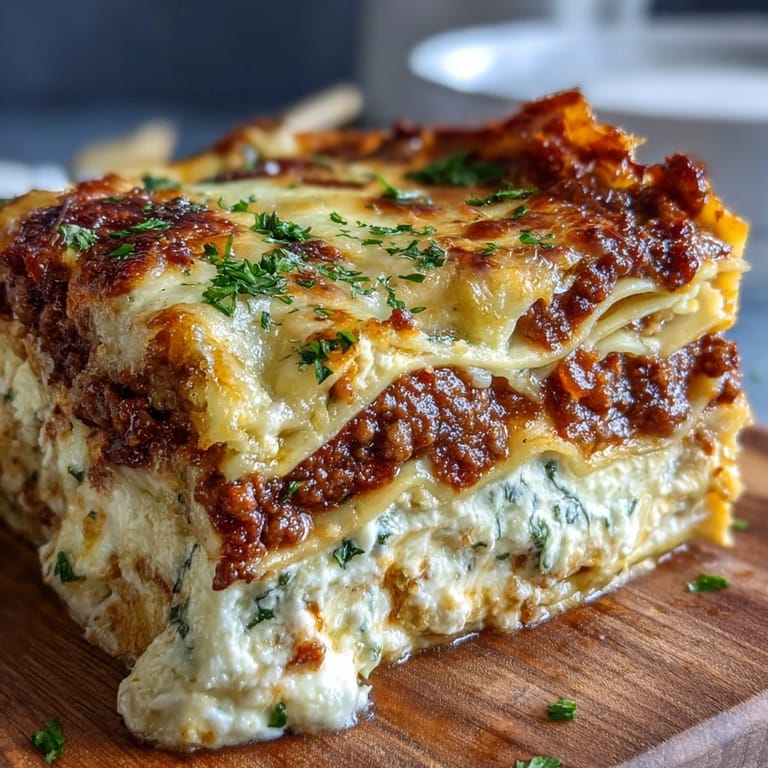
- Top with the last 4 noodles, remaining meat sauce, and then both remaining mozzarella and all the Parmesan. The cheese top is what people see first, so make it look generous.
- Cover and bake:
- Wrap the dish tightly with foil and slide it into the oven for 25 minutes. The foil traps steam and helps the noodles cook through without the cheese browning too fast.
- Uncover and finish:
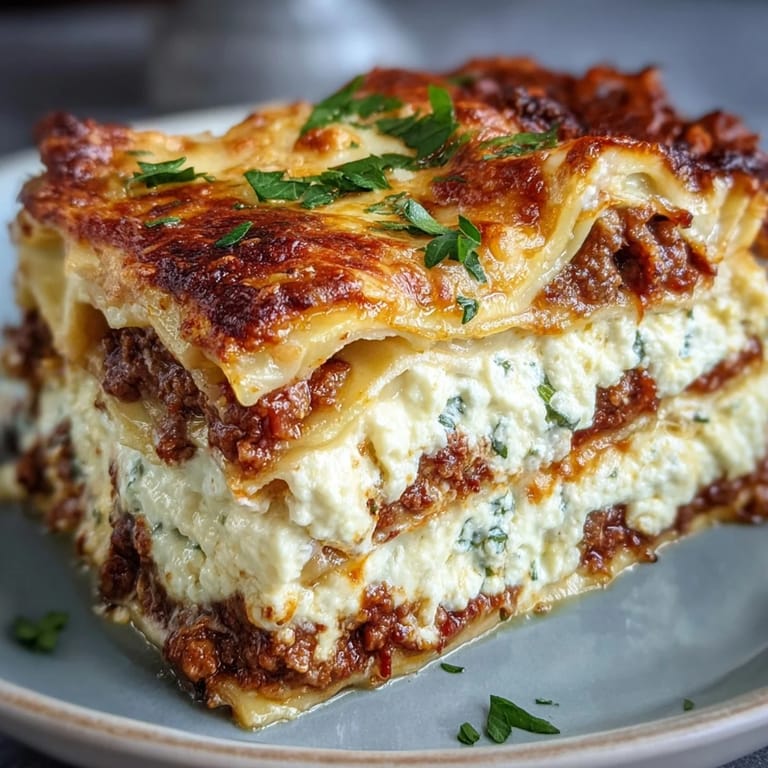
- Remove the foil and bake another 15 minutes until the cheese is golden and bubbling at the edges. You're looking for that slight char on top, not just melted.
- Let it rest:
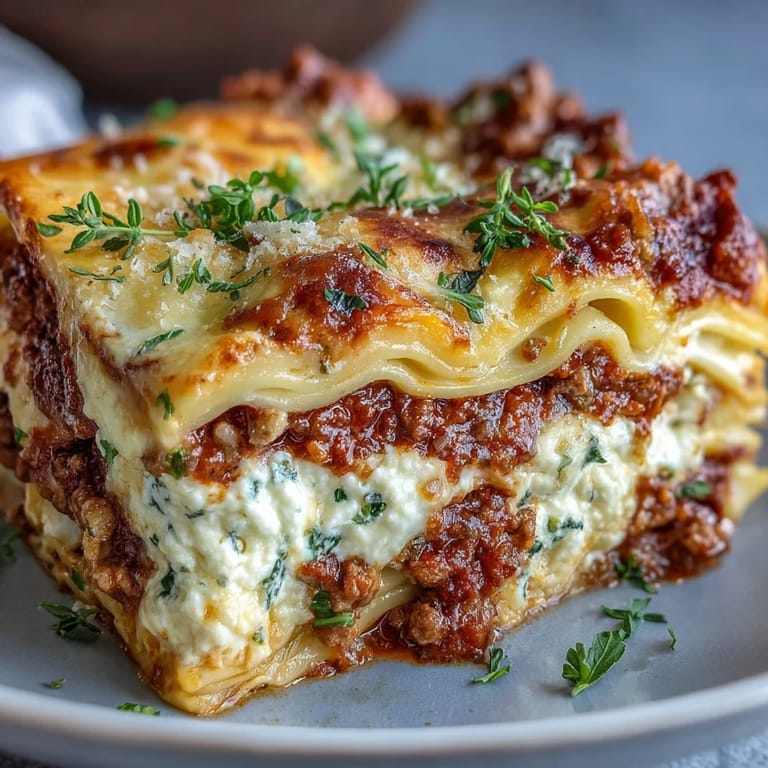
- This is crucial—pull it from the oven and let it sit for at least 15 minutes before cutting. The layers will set up, the noodles will finish absorbing liquid, and your slices won't fall apart on the plate.
 Pin to Board
 My daughter declared this was the dish she wanted at her college graduation dinner, and standing in my kitchen the day before making it, I realized this recipe had quietly become part of our family language. Food that brings people back, that they request, that tastes like home—that's what lasagna should be.
Why Uncooked Noodles Matter
The first time I tried this method, I was skeptical because every lasagna I'd made before involved boiling noodles, draining them, and dealing with that slippery pile. But uncooked noodles drink up exactly the amount of liquid they need from the sauce and ricotta, becoming tender without turning to paste. Your finished lasagna will have better texture, less watery bottom layer, and somehow more cohesive layers overall.
Layering Like You Know What You're Doing
The secret formula is sauce, noodles, creamy, cheese, repeat—and most people overthink how perfectly their layers need to line up. Noodles don't have to cover every single inch of sauce; a little overlap is fine, gaps are fine, messy is fine because once it bakes everything fuses together. What matters is that you end with noodles, then sauce, then cheese on top so it gets brown and bubbly.
Make It Your Own
This foundation is solid enough to welcome additions without falling apart—sautéed spinach mixed into the ricotta layer adds earthiness, mushrooms add umami, roasted red peppers add sweetness. I've made it with extra garlic, with red pepper flakes mixed into the sauce, with a splash of red wine in the meat mixture. The beauty of lasagna is that it's forgiving enough to become your version of itself.
- Sauté spinach or mushrooms separately and layer them with the ricotta for extra vegetables without extra moisture.
- A splash of red wine in the meat sauce adds depth and rounds out the flavors beautifully.
- Make it ahead and refrigerate up to 24 hours before baking, or freeze for 2 months and bake straight from frozen (just add 10 to 15 minutes to cooking time).
 Pin to Board
 This lasagna never feels like a recipe—it feels like an invitation to sit at someone's table and feel cared for. Make it when you want people to know you took time for them.
Recipe Questions & Answers
- → Should I cook the lasagna noodles before assembling?
No need to boil the noodles first. The uncooked sheets will cook perfectly in the oven as they absorb moisture from the meat sauce and ricotta mixture during baking.
- → How long should lasagna rest before serving?
Let the lasagna rest for at least 15 minutes after removing from the oven. This allows the layers to set and makes cutting clean, neat slices much easier.
- → Can I make lasagna ahead of time?
Absolutely. Assemble the dish up to 24 hours in advance, cover tightly, and refrigerate. You may need to add 5-10 minutes to the baking time if baking cold from the refrigerator.
- → What can I add to the meat sauce for more flavor?
Sautéed mushrooms, spinach, or bell peppers work wonderfully layered with the ricotta. You can also add a pinch of red pepper flakes to the meat sauce for subtle heat.
- → How do I know when lasagna is done baking?
The lasagna is ready when the cheese is golden and bubbly, and you see the sauce bubbling up around the edges. A knife inserted in the center should come out hot.
- → Can I freeze leftovers?
Leftovers freeze beautifully for up to 2 months. Cut into individual portions, wrap tightly in plastic and foil, then thaw overnight in the refrigerator before reheating.