 Pin to Board
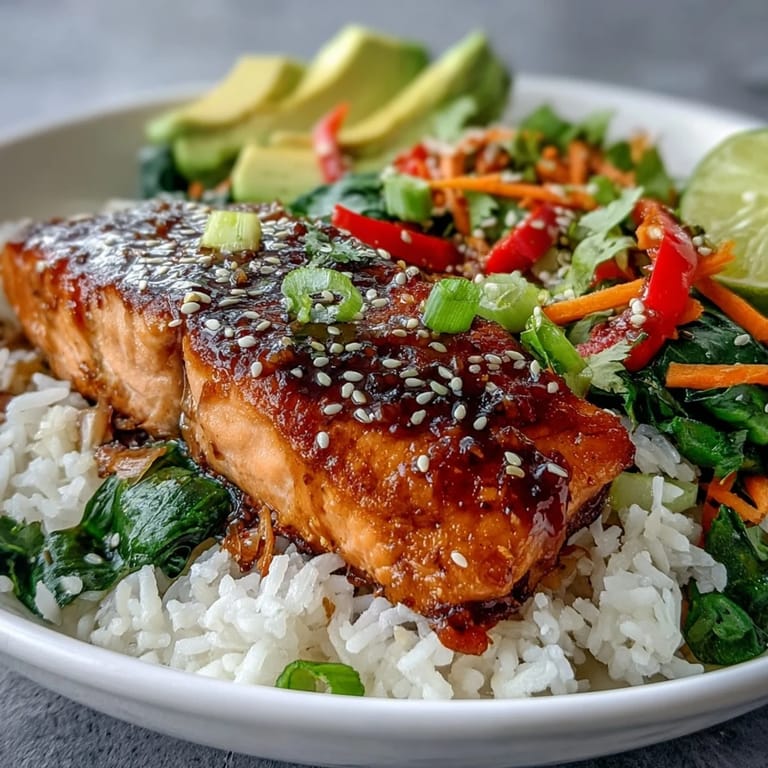
 There's something about the sizzle of salmon hitting a hot pan that makes me feel like I'm actually cooking something worthwhile. This soy-ginger bowl landed in my rotation during a particularly uninspired week when I needed something that tasted impressive but didn't require me to fuss endlessly. The glaze caught me off guard—how could something so simple (soy, ginger, honey) taste so bright and balanced? Now it's the meal I make when I want to feel good about what's on my plate without spending my entire evening in the kitchen.
I made this for my friend who was going through a phase of cooking everything from frozen meals, and watching her taste that salmon for the first time was oddly satisfying. She kept asking if I'd bought it from a restaurant, then seemed surprised when I explained it was just a marinade and a hot pan. That's when I realized this recipe's real gift—it makes you look like you know what you're doing, even on nights when you're just winging it.
Ingredients
- Salmon fillets (4, about 150g each): Fresh, high-quality salmon makes a noticeable difference here; ask your fishmonger if they have something that was recently delivered, and don't be shy about requesting skin-on if you like crispy edges.
- Soy sauce (4 tablespoons, low sodium): The sodium adds up fast, so low-sodium is worth the choice; regular will oversalt your glaze and drown out the ginger.
- Fresh ginger (2 tablespoons, grated): Grate it just before mixing so you capture all those sharp, peppery oils that fade once it sits around.
- Honey or maple syrup (2 tablespoons): Both work beautifully; honey gives you a delicate floral note while maple adds earthiness—pick whichever speaks to your mood.
- Garlic cloves (2, minced): Fresh garlic is non-negotiable here; powdered garlic tastes flat by comparison.
- Rice vinegar (1 tablespoon): This brings acidity that prevents the glaze from tasting one-dimensional and sweet.
- Sesame oil (1 tablespoon in marinade, 1 tablespoon for vegetables): The small amount in the marinade adds warmth; don't skimp because it's expensive, since you need that nuttiness.
- Sriracha or chili paste (1 teaspoon, optional): Skip this if you prefer no heat, but even a teaspoon adds a whisper of complexity that makes people wonder what you did differently.
- Sesame seeds (1 tablespoon for salmon, plus extra for garnish): Toast them lightly in a dry pan first if you have time—it wakes them up.
- Jasmine or sushi rice (2 cups uncooked): Jasmine rice stays fluffy and slightly fragrant, which pairs naturally with Asian flavors.
- Water (2 1/2 cups): Use filtered water if yours tastes heavily chlorinated, since it affects the final rice flavor more than you'd think.
- Edamame (1 cup shelled): Frozen works perfectly and saves you time; thaw them quickly or add them frozen directly to the pan if you like a firmer bite.
- Shredded carrots (1 cup): Buy pre-shredded if you're short on time, though freshly shredded stays crisper.
- Red bell pepper (1, thinly sliced): The bright color matters here—it makes the bowl look alive on the plate.
- Baby bok choy or snap peas (1 cup, sliced): Bok choy is slightly more delicate, while snap peas stay snappier; choose based on your texture preference.
- Green onions (2, sliced thin): Add these at the very end so they stay fresh and don't wilt into the warm rice.
- Avocado (1, sliced): Slice it just before assembly and squeeze a little lime on it so it doesn't brown; this is a moment where last-minute prep pays off.
- Fresh cilantro or microgreens (optional): These feel fancy but are optional; save them for when you're trying to impress someone.
- Lime wedges (for serving): A squeeze of lime at the table brightens everything and ties the whole bowl together.
Tired of Takeout? 🥡
Get 10 meals you can make faster than delivery arrives. Seriously.
One email. No spam. Unsubscribe anytime.
Instructions
- Mix your marinade:
- Whisk soy sauce, honey, ginger, garlic, rice vinegar, sesame oil, and sriracha in a bowl until the honey dissolves completely. This is your moment to taste and adjust—if it feels too salty, add a splash more vinegar; if it's too sharp, a tiny drizzle of honey balances it out. Set aside 2 tablespoons in a small dish before you go any further.
- Marinate the salmon:
- Place salmon fillets in a shallow dish or bag and pour the larger batch of marinade over them, turning to coat all sides. Let them sit in the refrigerator for 15 to 30 minutes while you prep everything else—this is the perfect window to get your rice started and vegetables chopped.
- Start the rice:
- Rinse your rice under cold water until the water runs mostly clear, which removes excess starch so it doesn't turn gluey. Combine rice, water, and a pinch of salt in a saucepan, bring to a boil, then cover and drop the heat to low for 15 minutes until the water is absorbed. Once it's done, remove from heat and let it sit, still covered, for 5 minutes before fluffing gently with a fork.
- Cook the vegetables:
- While rice simmers, heat sesame oil in a large nonstick skillet over medium-high heat until it shimmers and smells fragrant. Add edamame, carrots, bell pepper, and bok choy, then stir-fry for 3 to 4 minutes, tossing constantly so everything stays crisp-tender rather than turning soft. You want to hear them sizzle and see them slightly caramelize at the edges.
- Sear the salmon:
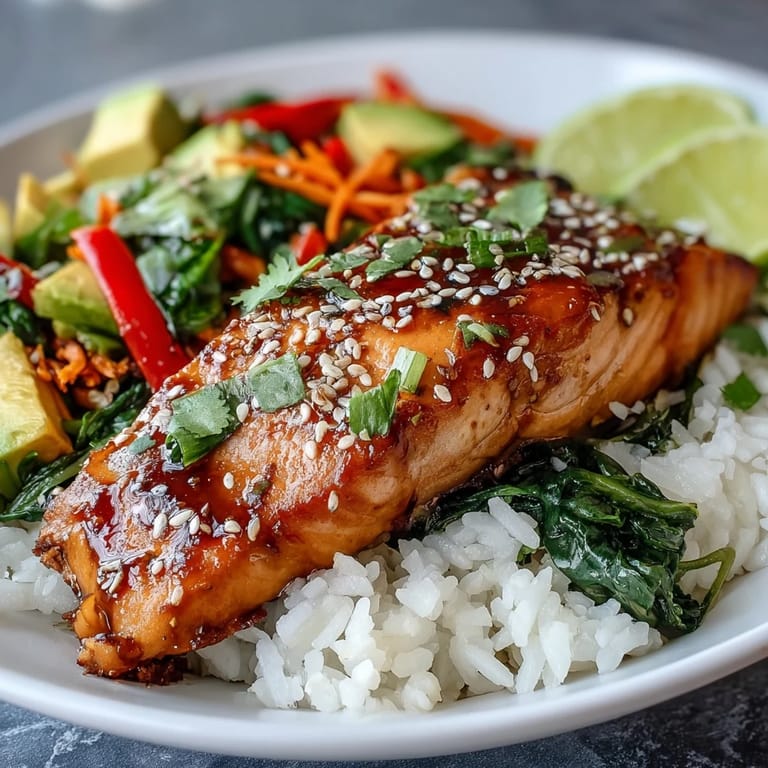
- Remove salmon from the marinade (discard what's left in the dish) and add a splash of oil to your skillet if needed. Sear the fillets skin-side down for 3 to 4 minutes over medium-high heat until you see them turn opaque from the bottom up, then flip and cook the other side for another 3 to 4 minutes. The edges should look slightly caramelized and the glaze should coat the fish like lacquer.
- Assemble your bowls:
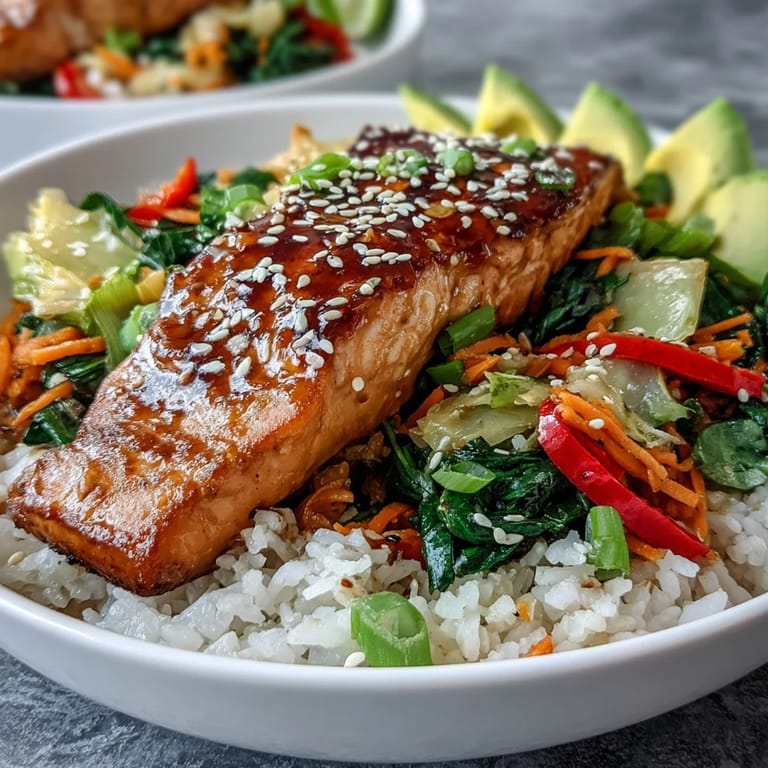
- Divide fluffy rice among four bowls, then arrange stir-fried vegetables, a salmon fillet, avocado slices, and green onions on top. Sprinkle with sesame seeds and your choice of cilantro or microgreens, then drizzle with the reserved marinade you set aside earlier. Serve immediately with lime wedges so people can squeeze them over according to their taste.
 Pin to Board
 There was an evening when my partner came home from work looking completely defeated, and I had this bowl ready within 45 minutes. Watching them eat that first bite, seeing their shoulders drop and their whole expression shift—that's when I understood that feeding someone well is sometimes the most honest thing you can offer. Food doesn't fix hard days, but it can remind you that someone cares enough to try.
Making It Your Own
The beauty of this bowl is that it adapts to whatever you have on hand without losing its personality. I've swapped brown rice for jasmine when that's all I had, added crispy chickpeas for extra protein, or thrown in cucumber slices for brightness. The core—that ginger-soy glaze and the salmon—stays the same, but everything else is a conversation between you and your pantry. Some nights I add pickled ginger for extra tang, other times sliced radishes for peppery crunch.
Timing and Prep Strategy
The 40-minute timeline assumes you're moving at a regular pace, not rushing or taking shortcuts. If you prep your vegetables ahead (shred carrots, slice peppers, mince garlic), you'll cut active cooking time down to about 25 minutes. The one thing you can't rush is marinating the salmon—those flavors need time to work, so plan accordingly. I usually prep my vegetables while the salmon marinates, which keeps my hands busy and my mind calm.
Flexibility and Substitutions
This recipe speaks dairy-free naturally, but you can also lean into that if it matters to you—there's no cream or cheese hiding anywhere. Swap the jasmine rice for brown rice if you want earthiness, or cauliflower rice if you're watching carbs and don't mind the texture change. For gluten concerns, tamari swaps directly for soy sauce without any adjustment needed.
- Use whatever vegetables speak to you—broccoli, mushrooms, asparagus, or even thinly sliced zucchini all work beautifully in this framework.
- If salmon isn't your thing or you want to rotate proteins, this glaze works equally well on halibut, cod, or even grilled chicken thighs.
- Can't find sesame oil? Use a neutral oil and add a pinch of sesame seeds to the marinade instead to capture some of that nuttiness.
 Pin to Board
 This bowl has become my reliable dinner when I need something that tastes thoughtful but doesn't ask for much in return. Every time I make it, it reminds me that the best meals are often the simplest ones, built on good ingredients and a little patience.
Recipe Questions & Answers
- → Can I use frozen salmon fillets?
Yes, frozen salmon works well. Thaw completely in the refrigerator before marinating to ensure proper flavor absorption and even cooking.
- → How do I store leftovers?
Store components separately in airtight containers. Refrigerate for up to 2 days. Reheat salmon and vegetables gently, then assemble with fresh garnishes.
- → What vegetables can I substitute?
Try sugar snap peas, shredded cabbage, sliced cucumber, or steamed broccoli. Any crisp Asian-style vegetables work beautifully in this bowl.
- → Is the marinade spicy?
The sriracha is optional. Without it, the dish has mild warmth from ginger. Add more or less chili paste to adjust the heat level to your preference.
- → Can I grill the salmon instead?
Absolutely. Grill over medium-high heat for 3-4 minutes per side, basting with marinade. The smoky char complements the soy-ginger flavors wonderfully.