 Pin to Board
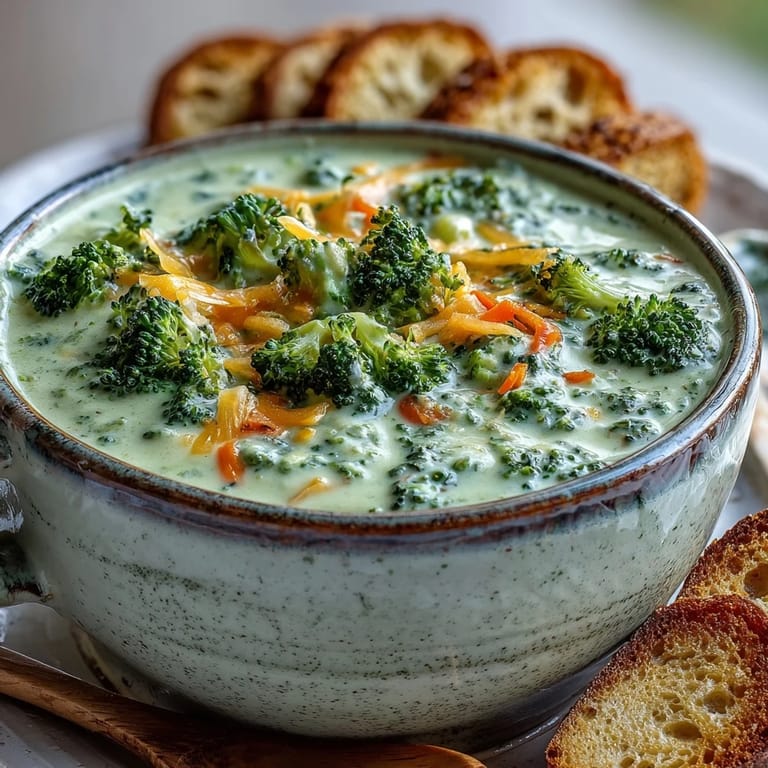
 My neighbor Sarah showed up at my door one October evening with a bag of broccoli from her garden, insisting I do something interesting with it. I'd made creamy soups before, but there was something about her enthusiasm that made me want to get this one right. That night, stirring sharp cheddar into simmering broth while the kitchen filled with that golden, savory steam, I understood why she'd made the trip. This soup became the thing I make when someone needs comfort, or when I need to remember that simple ingredients can taste like home.
I made this for my book club once, and everyone was so busy eating they forgot to discuss the actual book. Someone asked if it was restaurant soup, and I had to laugh because it's just vegetables, butter, and good cheese working together. That moment taught me that the best meals are the ones where conversation stops because the food says enough.
Ingredients
- Broccoli florets: Use the tender florets and don't waste the stems—peel them and chop them fine because they're sweet and won't get stringy.
- Carrots: Shredding or slicing thin means they soften faster and distribute their natural sweetness evenly through the soup.
- Onion and garlic: The aromatics that build flavor from the very first moment the butter hits the pan; don't skip the mincing step.
- Sharp cheddar cheese: This is not the time for mild cheddar—you need that bite and tang to make the soup memorable instead of forgettable.
- Whole milk and heavy cream: Together they create that silky texture that coats your mouth; using all milk makes it thinner and less luxurious.
- Unsalted butter: It lets the other flavors shine instead of being masked by salt, giving you full control over seasoning.
- Vegetable broth: Check your label because some broths are aggressively salty and will throw off the whole balance.
- All-purpose flour: This roux thickens the soup naturally without needing cornstarch or cream cheese, and it adds subtle depth.
- Salt, pepper, and the optional spices: Paprika adds color and warmth, while nutmeg brings an almost invisible richness that makes people ask what your secret ingredient is.
Tired of Takeout? 🥡
Get 10 meals you can make faster than delivery arrives. Seriously.
One email. No spam. Unsubscribe anytime.
Instructions
- Melt the butter and soften the onion:
- Place your large pot over medium heat and let the butter get foamy and golden, then add your chopped onion. You'll know it's ready when it turns translucent and smells sweet, usually around 4 minutes—this is when you're building the foundation of flavor.
- Wake up the garlic:
- Add minced garlic and let it sit for just a minute, stirring so it perfumes the butter without browning. You should smell something wonderful at this point.
- Make the roux:
- Sprinkle the flour over everything and stir constantly for 2 minutes, scraping the bottom so nothing sticks. This cooks out the raw flour taste and creates the thickening agent your soup needs.
- Build the broth base:
- Whisk in the vegetable broth slowly, a little at a time, making sure there are no lumps hiding in the corners. This is easier than you think if you're patient and you actually use the whisk instead of just stirring.
- Cook the vegetables tender:
- Drop in your chopped broccoli and carrots, bring everything to a gentle simmer, and let it bubble quietly uncovered for 15 to 20 minutes. The vegetables should bend easily when you press them with a spoon but still hold their shape.
- Add the dairy gently:
- Reduce heat to low, then pour in the milk and cream slowly while stirring, keeping the temperature gentle so nothing curdles or breaks.
- Melt in the cheese:
- Add the grated cheddar one handful at a time, stirring after each addition until it's completely smooth before you add the next. Patience here prevents you from ending up with cheese strings instead of a silky sauce.
- Season and adjust:
- Taste first, then add salt and pepper to your preference, plus the paprika and nutmeg if you're using them. The optional spices create a subtle warmth that makes the cheese taste richer than it actually is.
- Blend for texture:
- Use an immersion blender to partially puree the soup if you like it creamier, or leave it as is if you prefer chunks of vegetable in every spoonful. Either way works; it's your comfort, your rules.
- Finish and serve:
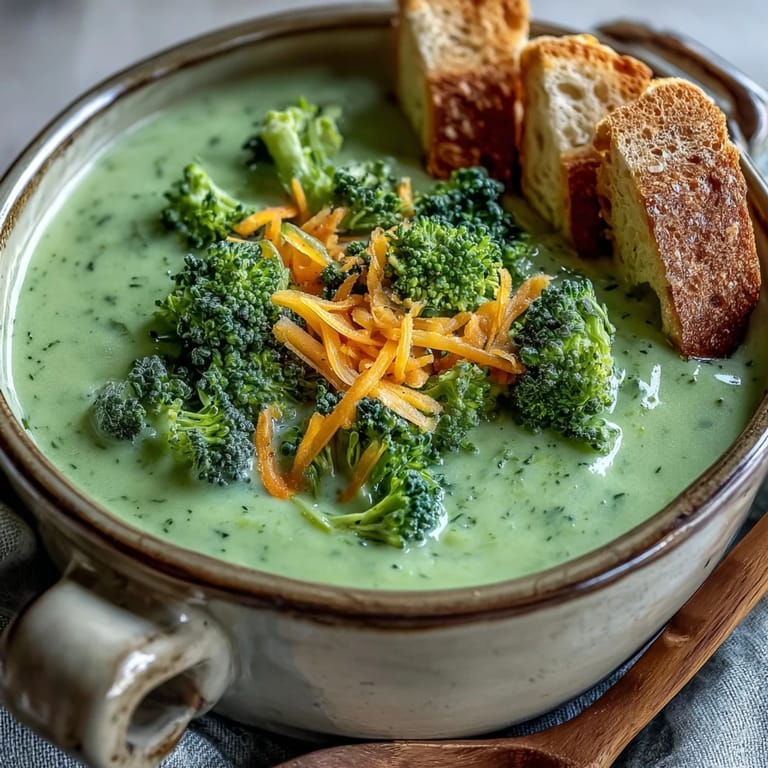
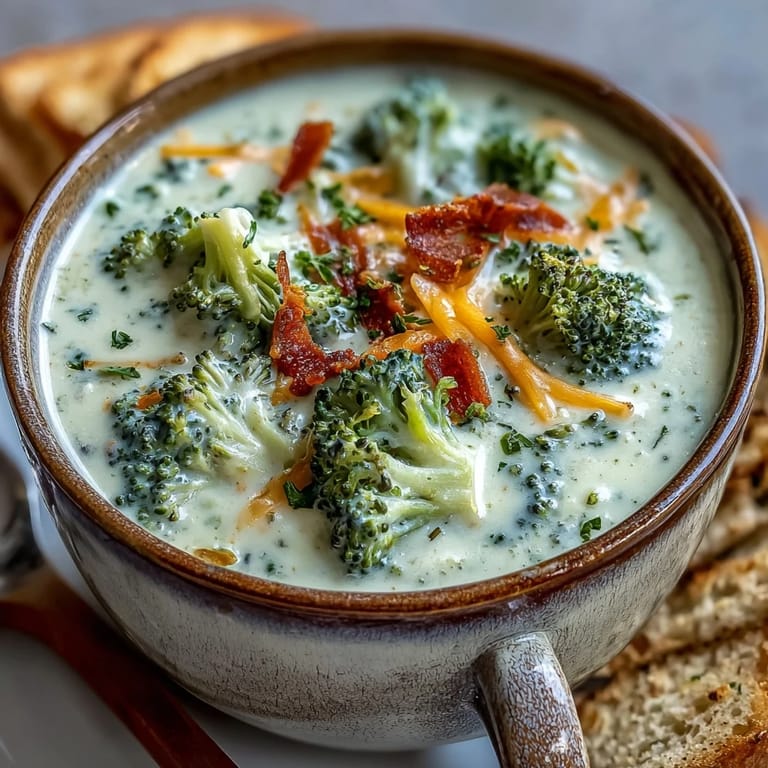
- Taste one more time and adjust anything that needs it, then ladle into bowls and serve steaming hot alongside crusty bread for soaking up every drop.
 Pin to Board
  Pin to Board
 My daughter asked for this soup on the day she had surgery and came home from the hospital. I made it exactly this way, and she ate three bowls before asking for more, and for the first time that week, she smiled like herself again. That's when I realized this recipe isn't just about flavor—it's about what we feed people when they need to feel cared for.
Choosing Your Cheddar
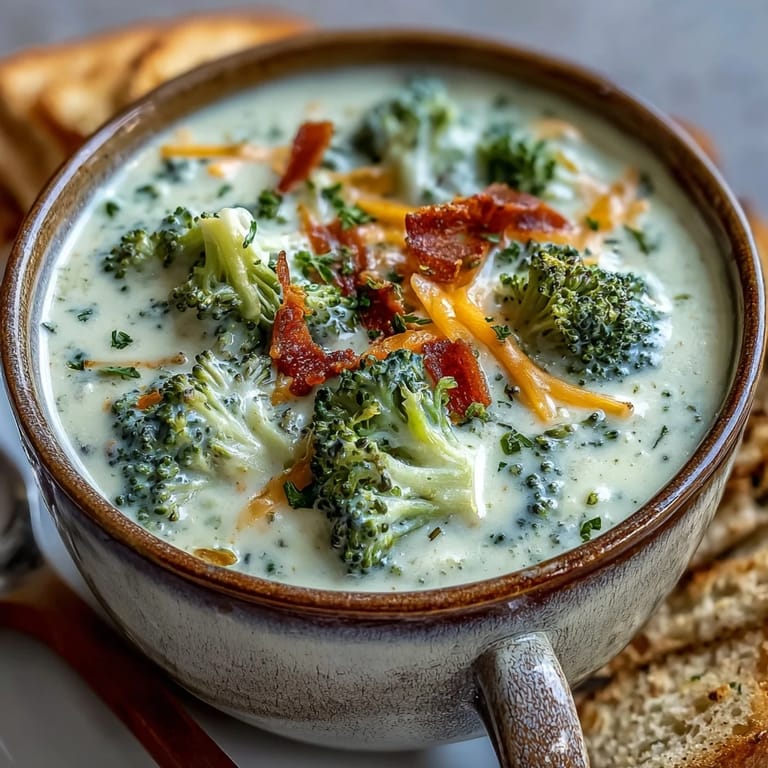
Not all sharp cheddars are created equal, and this matters more than you'd think. The ones aged longer have more crystals and complexity, while younger sharp cheddars are one-note bright. I learned to buy blocks and grate them myself rather than using pre-shredded, because the anti-caking agents in the bags make the sauce feel slightly gritty instead of luxurious. If you can find an extra sharp aged cheddar from a local dairy or cheese counter, that's the splurge worth making.
Making It Lighter or Richer
This soup is naturally indulgent, but you have control over how much so. If you're leaning lighter, swap half the cream for more milk or even use a splash of chicken broth to reduce richness without losing flavor. On the flip side, if you want it almost dessert-like in creaminess, use all cream and butter instead of splitting them, and add an extra handful of cheese. The beauty of understanding your base means you can dial this up or down depending on who you're cooking for or how you're feeling that day.
What Happens After You Make It
This soup keeps beautifully in the refrigerator for three to four days, and the flavors actually deepen as it sits. Reheat gently over low heat with a splash of milk if it's thickened too much, because rapid heating or high temperatures can cause the cream to break. Freezing works too, though the texture becomes slightly less silky after thawing—it's still delicious, just fractionally less elegant.
- Cool it completely before refrigerating so it doesn't create condensation that waters everything down.
- If you're meal prepping, consider leaving out the cream and adding it fresh when you reheat, which keeps the texture perfect.
- A few dashes of hot sauce stirred in just before serving transforms this into something spicy without changing the base at all.
 Pin to Board
  Pin to Board
 There's something profound about a soup that tastes this good and is this simple, like you've stumbled onto something true. Make this when you need to feel capable in the kitchen, or when someone you love needs reminding that they're worth the effort.
Recipe Questions & Answers
- → Can I make this soup ahead of time?
Yes, you can prepare this soup up to 2 days in advance. Store it in an airtight container in the refrigerator and reheat gently over low heat, stirring frequently. Add a splash of milk if it thickens too much during storage.
- → How do I prevent the cheese from clumping?
Add the grated cheddar gradually, one handful at a time, while stirring constantly over low heat. Make sure the soup is not boiling when you add the cheese, as high heat can cause it to separate and become grainy.
- → Can I freeze broccoli cheddar soup?
While you can freeze this soup for up to 3 months, dairy-based soups may separate slightly upon thawing. For best results, freeze before adding the cheese and cream, then stir those in when reheating.
- → What can I substitute for heavy cream?
You can use half-and-half, evaporated milk, or Greek yogurt for a lighter option. For a dairy-free version, try coconut cream or cashew cream, though the flavor profile will change slightly.
- → How can I make this soup thicker?
To thicken the soup, add an extra tablespoon of flour to the roux, simmer longer to reduce liquid, or blend more of the vegetables. You can also add a slurry of cornstarch and water, or stir in extra shredded cheese.
- → What type of cheddar works best?
Sharp or extra-sharp cheddar provides the best flavor for this soup. Avoid pre-shredded cheese as it contains anti-caking agents that can affect texture. Grate a block of good-quality cheddar for smoothest melting.