 Pin to Board
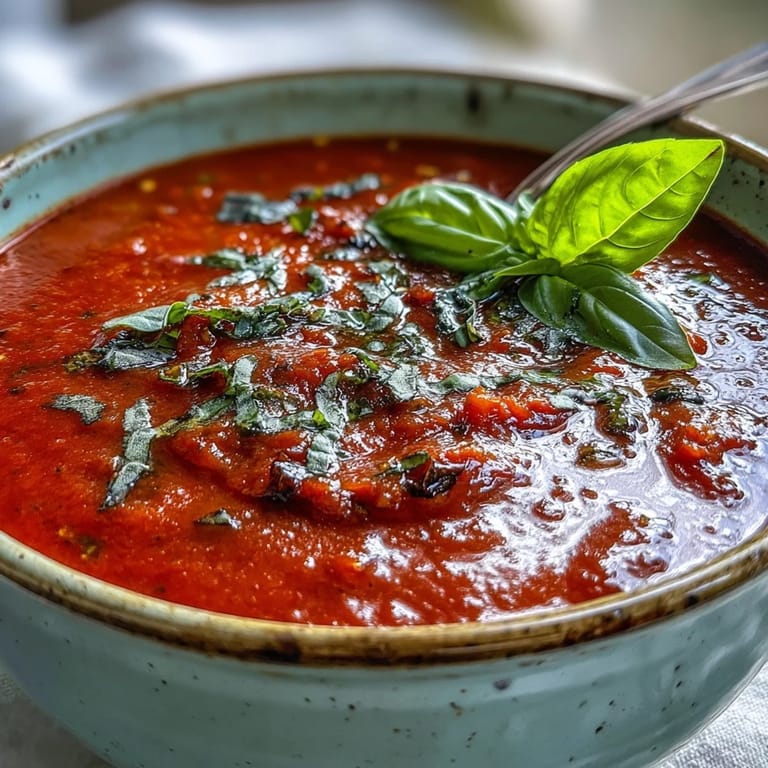
 There's something about the smell of tomatoes hitting a hot oven that makes you stop whatever you're doing. I discovered this soup on an ordinary Tuesday when I had a glut of late-summer tomatoes sitting on my counter, stubbornly refusing to be eaten fresh. Instead of letting them go to waste, I threw them in the oven with whatever aromatics I could find, and the kitchen filled with this deep, caramelized sweetness that felt almost decadent. That first spoonful was a revelation—silky, bright, nothing like the watery tomato soup I remembered from childhood. It became my go-to when I wanted to feel like I'd ordered something special without leaving home.
I made this for my sister during a surprise visit, and she kept asking if I'd bought it from somewhere fancy until I showed her the empty tomato halves cooling on the counter. There's something satisfying about watching someone realize you just created that restaurant-level experience in your own kitchen. She requested it again the next time she came over, which honestly felt like the highest compliment.
Ingredients
- Ripe tomatoes, halved (1.5 kg): The foundation of everything, and you want them truly ripe—the kind that feel heavy in your hand and smell like summer. Don't skimp here; underripe tomatoes will never develop that deep, caramelized sweetness roasting promises.
- Yellow onion, quartered (1 large): As the onion roasts, its natural sugars concentrate and become almost honey-like, balancing any sharpness from the tomatoes.
- Garlic cloves, peeled (6): Roasting mellows garlic into something gentle and almost sweet rather than harsh and pungent.
- Extra-virgin olive oil (2 tbsp): Use one you actually like drinking, because you'll taste it clearly in every spoonful.
- Kosher salt and black pepper: These aren't just seasonings—they draw out the vegetables' moisture during roasting and intensify their flavors.
- Vegetable broth (2 cups): Low-sodium broth lets the roasted vegetables shine without competing background noise.
- Fresh basil leaves (1/2 cup): Add these after cooking to preserve their bright, peppery notes instead of letting them become muted.
- Unsalted butter (1 tbsp, optional): A tiny knob adds silkiness and richness without being obvious about it.
- Sugar (1 tsp, optional): Just a whisper to balance tomato acidity if your soup tastes slightly sharp.
- Heavy cream or crème fraîche (1/4 cup): Swirl it in just before serving for a luxurious finish, or skip it entirely if you prefer.
Tired of Takeout? 🥡
Get 10 meals you can make faster than delivery arrives. Seriously.
One email. No spam. Unsubscribe anytime.
Instructions
- Heat your oven and prep the pan:
- Get your oven to 220°C (425°F) and line a baking sheet with parchment paper—this small step prevents sticking and cleanup later. You want it ready before the vegetables go in so they hit heat immediately.
- Arrange and season the vegetables:
- Spread the tomato halves cut-side up, scatter the onion quarters and garlic cloves around them, then drizzle everything with olive oil. Give it all a gentle toss to coat evenly, and season generously with salt and pepper—don't be timid here.
- Let them roast until caramelized:
- This takes 35 to 40 minutes, and you'll know it's done when the tomato edges are dark and slightly blackened, and the onions are nearly collapsing with tenderness. The slower the roast, the deeper the flavor, so don't rush this part.
- Transfer to the pot and build the broth:
- Scrape everything into a large pot, including every drop of caramelized juice from the pan—that's liquid gold. Add the vegetable broth and bring it to a gentle simmer over medium heat.
- Add the finishing touches:
- Stir in the fresh basil, butter if using, and sugar if the soup tastes slightly sharp. Let it simmer for about 5 minutes so the basil releases its flavor into the broth.
- Blend until silky:
- Use an immersion blender right in the pot, moving it around until no chunks remain—it should feel velvety under the spoon. If you prefer working in batches with a countertop blender, do that and return everything to the pot.
- Taste and adjust:
- This is where your own preferences take over—add more salt, a crack more pepper, or a squeeze of sugar if needed. If you want it even silkier, strain it through a fine sieve, though I often skip this step and love the slightly thicker texture.
- Serve with intention:
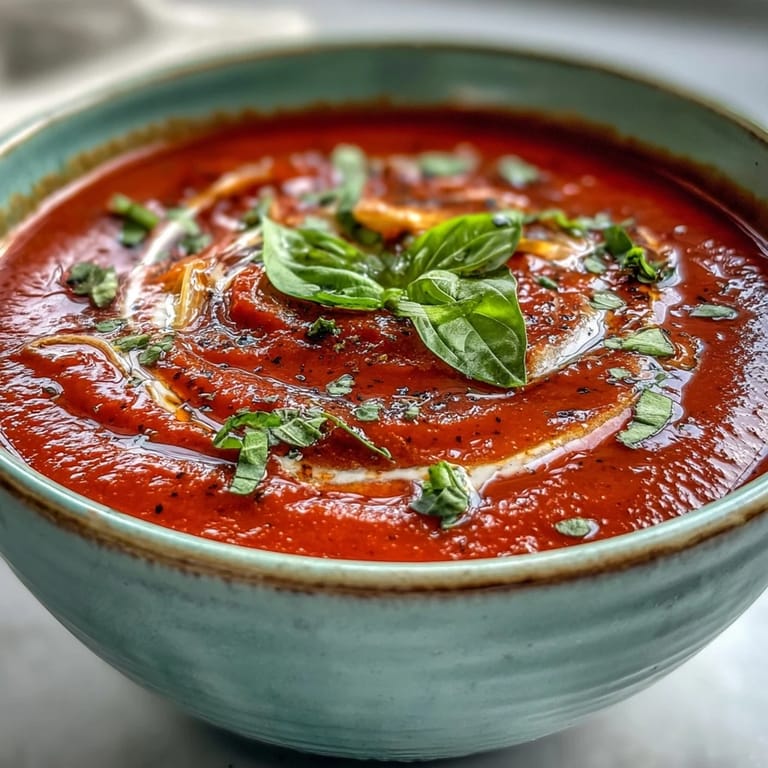
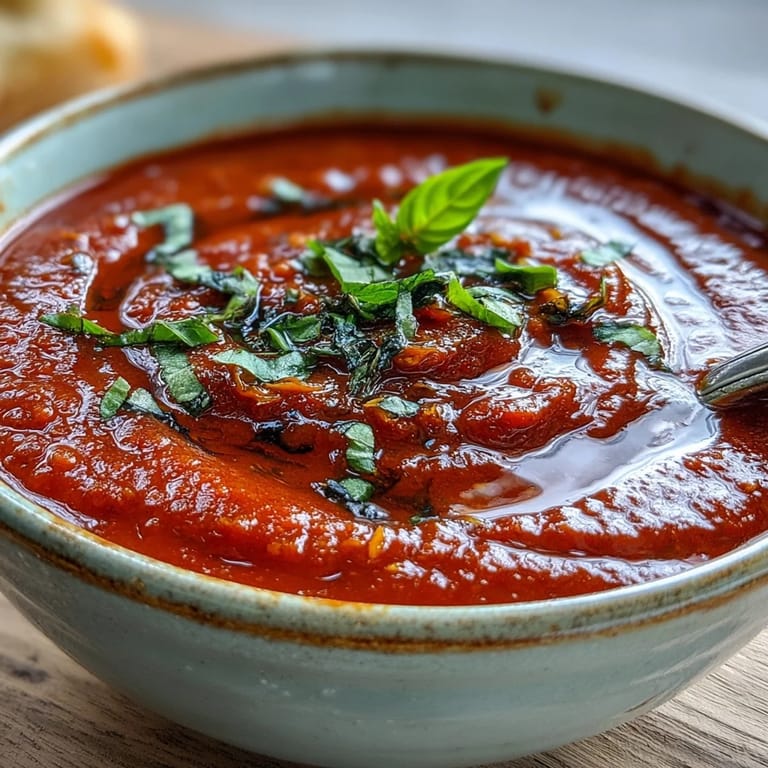
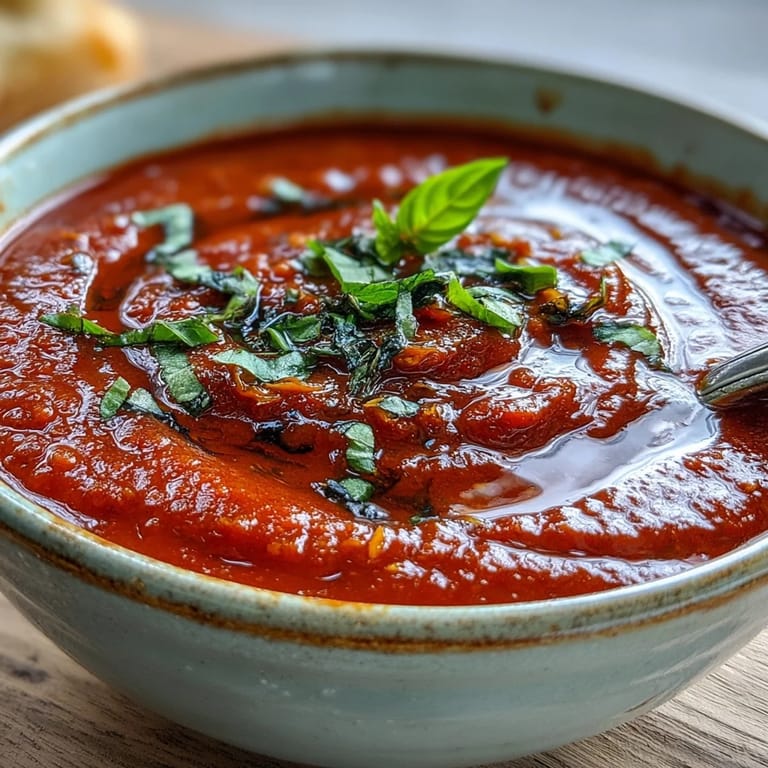
- Ladle it into bowls and drizzle with cream, tear fresh basil over the top, and add croutons if you want some texture. A good crusty bread alongside is never wrong.
 Pin to Board
  Pin to Board
 I served this soup to my book club on a October evening when everyone arrived looking worn out from their weeks, and something about the warmth and the basil-scented steam seemed to reset everyone's mood. By the time we'd finished the first bowl, the conversation had shifted from complaints to laughter, and I realized how much a single, honest dish can do.
Why Roasting Changes Everything
The magic happens in the oven, not on the stovetop. When tomatoes roast, their water evaporates while their sugars concentrate and caramelize against the hot pan. This is why roasted tomato soup tastes nothing like simmered tomato soup—you're not just cooking tomatoes, you're transforming them into something deeper and more complex. The same goes for the onions and garlic; roasting turns them sweet and mellow rather than sharp and raw.
Customizing Without Losing the Soul
This soup welcomes additions once you understand its foundation. A splash of balsamic vinegar adds dark, slightly sweet depth; a pinch of red pepper flakes brings gentle heat; a teaspoon of tomato paste before blending deepens the tomato notes. Fresh thyme or oregano can replace or join the basil if that's what calls to you. The important thing is adding these accents after roasting so you're building on something solid, not trying to fix something weak.
Making It Your Own
Some people swear by straining the soup through a fine sieve for restaurant-level smoothness, while others—myself included—love the slight texture from tiny tomato particles. Neither is wrong; it's just a choice about what feels luxurious to you. The same goes for cream: a swirl is elegant, but the soup stands beautifully on its own if you'd rather skip it. This recipe is confident enough to bend.
- Save any extra roasted tomatoes and onions in the refrigerator to stir into pasta, grain bowls, or morning eggs.
- Leftovers taste even better the next day as flavors continue settling together, and soup keeps beautifully for three days refrigerated or several weeks frozen.
- Pair with a simple green salad and crusty bread for a light meal that somehow feels completely satisfying.
 Pin to Board
  Pin to Board
 This soup has become one of those recipes I return to constantly, whether I'm cooking for myself on a quiet evening or feeding people I love. It's proof that the simplest ingredients, treated with a little intention and heat, can become something that tastes like memory and comfort.
Recipe Questions & Answers
- → Can I use canned tomatoes instead of fresh?
While fresh tomatoes create the best roasted flavor, you can use two 28-ounce cans of whole peeled tomatoes. Drain them well, roast for 20-25 minutes instead of 35-40, and proceed with the instructions. The flavor will be slightly different but still delicious.
- → How do I make this soup vegan?
Simply omit the butter and heavy cream, or substitute with plant-based alternatives like vegan butter and coconut cream or cashew cream. The soup will still be rich and flavorful thanks to the roasted vegetables and olive oil.
- → Can I freeze this soup for later?
Yes, this soup freezes beautifully for up to 3 months. Cool completely before transferring to airtight containers, leaving some room for expansion. Thaw overnight in the refrigerator and reheat gently on the stovetop, stirring occasionally.
- → What can I serve alongside this soup?
This soup pairs wonderfully with crusty Italian bread, garlic bread, grilled cheese sandwiches, or a fresh green salad. For a complete meal, serve with bruschetta or a caprese salad to complement the tomato and basil flavors.
- → How can I adjust the consistency?
For a thicker soup, reduce the amount of vegetable broth to 1.5 cups or simmer longer to evaporate excess liquid. For a thinner consistency, add more broth gradually until you reach your desired texture. You can also add a splash of cream to create a richer, smoother consistency.
- → Why do some tomatoes taste too acidic?
Tomato acidity varies by variety and ripeness. Balance acidity by adding the optional teaspoon of sugar, a pinch of baking soda, or a splash of balsamic vinegar. Roasting also naturally reduces acidity by caramelizing the sugars in the tomatoes.