 Pin to Board
 There's something magical about the moment when roasted vegetables transform into something silky and warm. I was experimenting with my oven one autumn afternoon, tossing squash and broccoli with olive oil more out of curiosity than anything else, and the caramelization that happened was a complete revelation. That first spoonful of the finished soup, with its natural sweetness and gentle earthiness, made me realize I'd stumbled onto something worth making again and again.
I made this soup for my sister during a particularly cold weekend, and she sat at my kitchen counter with a steaming bowl while I told her about my kitchen experiments that week. She went back for thirds, which rarely happens, and we ended up talking for hours about how sometimes the simplest combinations are the ones that matter most. It became our soup after that, the one she requests when she visits.
Ingredients
- Butternut squash: The foundation of this soup's natural sweetness and creamy texture when roasted—look for one that feels heavy for its size, which means it's packed with moisture and flavor.
- Broccoli: Don't skip the roasting for this vegetable; it transforms from raw and slightly bitter into something caramelized and nutty that you'll actually crave.
- Yellow onion: Roasted alongside everything else, it becomes mellow and sweet, adding a subtle backbone to the whole dish.
- Garlic: Three cloves roasted until golden bring a gentle, almost caramel-like sweetness rather than sharp garlic bite.
- Vegetable broth: Use a good quality broth you actually enjoy drinking on its own—it becomes the base liquid that carries all the flavor.
- Coconut milk or heavy cream: Coconut milk keeps this vegan-friendly and adds a subtle tropical note, while heavy cream makes it richer and more indulgent; pick whichever suits your mood.
- Olive oil: For roasting the vegetables and bringing out their natural sugars through the heat.
- Kosher salt and black pepper: Season generously before roasting so the vegetables develop their own flavor rather than tasting seasoned at the end.
- Ground cumin: A half teaspoon adds an unexpected warmth that enhances both the squash and broccoli without announcing itself.
- Ground nutmeg: Just a whisper of this at the end creates that comforting, almost autumnal quality that makes people sigh with contentment.
Tired of Takeout? 🥡
Get 10 meals you can make faster than delivery arrives. Seriously.
One email. No spam. Unsubscribe anytime.
Instructions
- Get your oven ready and prep your vegetables:
- Preheat your oven to 425°F and line a baking sheet with parchment paper while you peel and cube the butternut squash, cut the broccoli into manageable florets, chop the onion into chunks, and leave the garlic cloves whole. Take a moment to make sure everything is roughly similar in size so it roasts evenly.
- Dress everything generously:
- Pile all your prepped vegetables onto that baking sheet, drizzle with olive oil, and sprinkle with salt, pepper, and cumin. Toss with your hands until every piece is coated in oil and spices—this is where the magic starts.
- Let the oven do its work:
- Roast for 25 to 30 minutes, stirring everything around halfway through so it browns evenly on all sides. You'll know it's ready when the squash is fork-tender and the broccoli edges are dark and crispy.
- Build the soup base:
- Transfer all your roasted vegetables to a large pot, pour in the vegetable broth, and bring everything to a gentle simmer over medium heat. Let it bubble quietly for about 10 minutes so the flavors have a chance to really get to know each other.
- Blend until smooth:
- Remove from heat and use an immersion blender to puree everything until it reaches that creamy, velvety texture you're after. If you're using a countertop blender instead, work in batches and be careful with the heat—let it cool slightly between batches if needed.
- Finish with finesse:
- Stir in your coconut milk or cream and that quarter teaspoon of nutmeg, then taste and adjust your salt and pepper as needed. Some soups need a little more seasoning than you'd expect, so don't be shy.
- Serve with warmth:
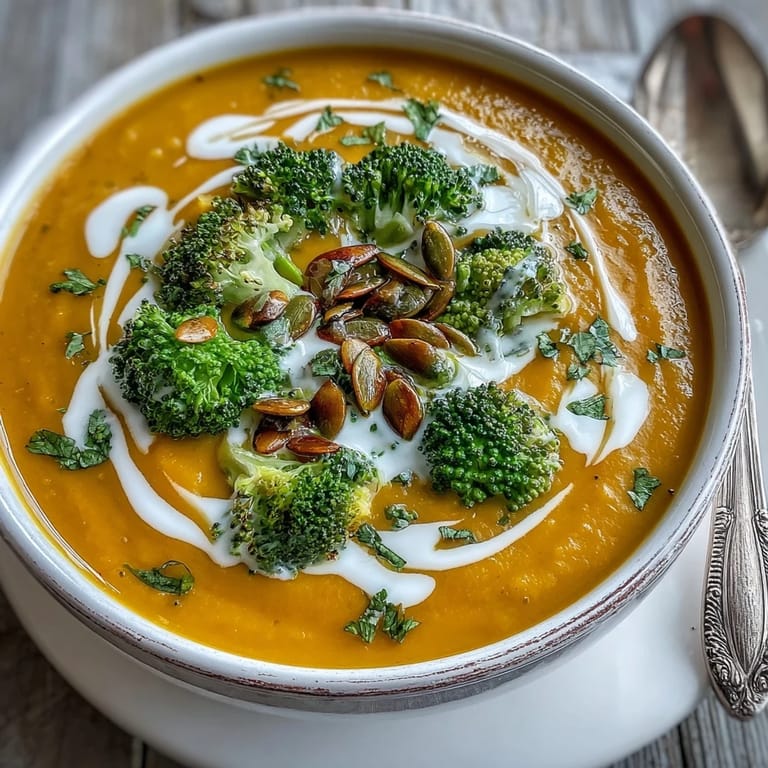
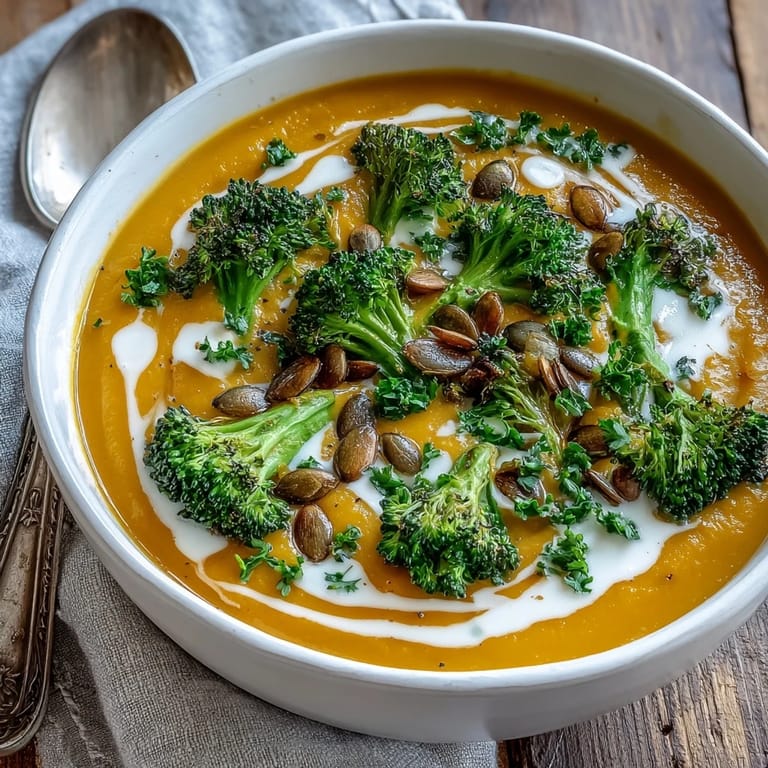
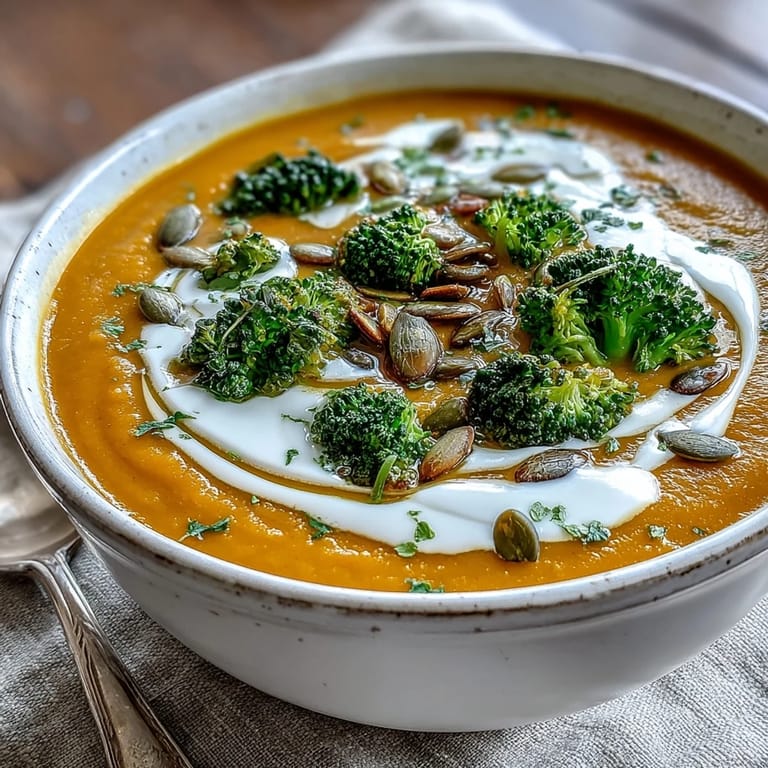
- Reheat gently if the soup has cooled while you were blending, then ladle into bowls and top with whatever garnishes call to you—toasted pumpkin seeds add a satisfying crunch, fresh parsley brings brightness, and an extra drizzle of cream makes it feel special.
 Pin to Board
 I discovered that this soup tastes even better the next day, once the flavors have had time to settle and deepen. There's something comforting about having a pot of it in the refrigerator, ready for a quick lunch or a warming dinner without any effort.
The Power of Roasting Vegetables
Roasting vegetables at high heat causes something called the Maillard reaction, which creates new flavors and browning that you simply can't achieve by boiling or steaming. When you roast butternut squash and broccoli, their natural sugars caramelize, turning them sweet and complex rather than just tender. It's the difference between a good soup and a soup that people actually remember and want to make themselves.
Making It Your Own
This recipe is flexible enough to bend to whatever you have on hand or whatever you're craving on a particular day. I've made it with sweet potato instead of squash, added a pinch of cayenne for warmth on cold nights, and squeezed fresh lemon juice into bowls for brightness when I wanted something more vibrant. The base is solid enough that you can play with it without losing what makes it work.
Storage and Serving Suggestions
This soup keeps beautifully in the refrigerator for up to four days and freezes wonderfully for up to three months—just leave a little space at the top of your container if freezing, since it will expand slightly. I like to serve it with crusty bread for dunking, or sometimes I'll top it with a handful of crispy chickpeas for extra texture and protein.
- If you're reheating from frozen, thaw it overnight in the refrigerator first, then warm it gently on the stove rather than in the microwave to preserve the creamy texture.
- Feel free to thin it out with extra broth if it seems too thick after a day or two in the fridge, as the soup will continue to thicken slightly as it sits.
- This makes enough for four generous servings, but the recipe doubles easily if you're feeding a crowd or want extra portions on hand.
 Pin to Board
 There's something deeply satisfying about a bowl of soup that tastes like you put real thought and care into it, even though the process is genuinely simple. Every time I make this, I remember why it became one of my most-requested recipes.
Recipe Questions & Answers
- → Can I make this soup ahead of time?
Yes, this soup stores well in the refrigerator for up to 4 days. Reheat gently on the stovetop, adding a splash of broth if needed to adjust consistency.
- → Can I freeze this soup?
Absolutely! Let the soup cool completely, then store in airtight containers for up to 3 months. Thaw overnight in the refrigerator and reheat on the stovetop.
- → What can I substitute for butternut squash?
Sweet potato works wonderfully as a substitute. You can also use acorn squash or kabocha squash for a similar sweet, earthy flavor.
- → How can I make this soup creamier?
For extra creaminess, use heavy cream instead of coconut milk, or add an extra 1/2 cup of your chosen cream. You can also stir in a tablespoon of butter before serving.
- → Can I add protein to this soup?
Yes! Top with grilled chicken, crispy chickpeas, or crumbled bacon. You can also stir in white beans during the simmering step for added plant-based protein.
- → What's the best way to peel butternut squash?
Use a sharp vegetable peeler or a knife. Cut off both ends first, stand it upright, and peel downward in strips. Alternatively, roast unpeeled and scoop out the flesh after cooking.