 Pin to Board
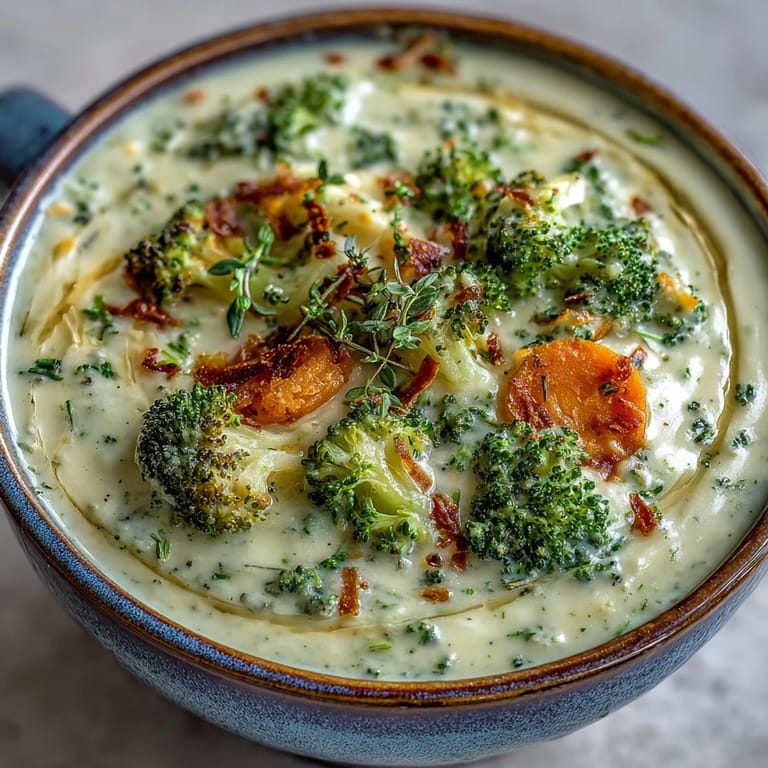
 There's something magical about the moment roasted broccoli hits a simmering pot of broth—the kitchen fills with this nutty, caramelized warmth that promises something better than ordinary vegetable soup. My neighbor dropped off a bag of farmer's market broccoli one autumn afternoon, and I found myself roasting it out of pure curiosity rather than following any recipe. Once I stirred in sharp cheddar and cream, I understood why she'd been raving about it all week. Now I make this soup whenever I need comfort without fuss, and it never disappoints.
I served this to my in-laws one snowy Saturday, expecting polite compliments, and instead watched my father-in-law have a second bowl before anyone else had finished their first. My mother-in-law asked for the recipe right there at the table, which felt like the highest compliment. Since then, it's become the soup I make when I want to impress people without them knowing how simple it actually was.
Ingredients
- Broccoli florets: Cutting them into similar-sized pieces ensures they roast evenly and caramelize beautifully, creating those golden edges that make this soup special.
- Carrots and yellow onion: These form the aromatic base and add natural sweetness that balances the sharp cheese and earthy broccoli.
- Garlic: Just three cloves is enough to whisper through the soup without overpowering it—added after the softer vegetables so it doesn't burn.
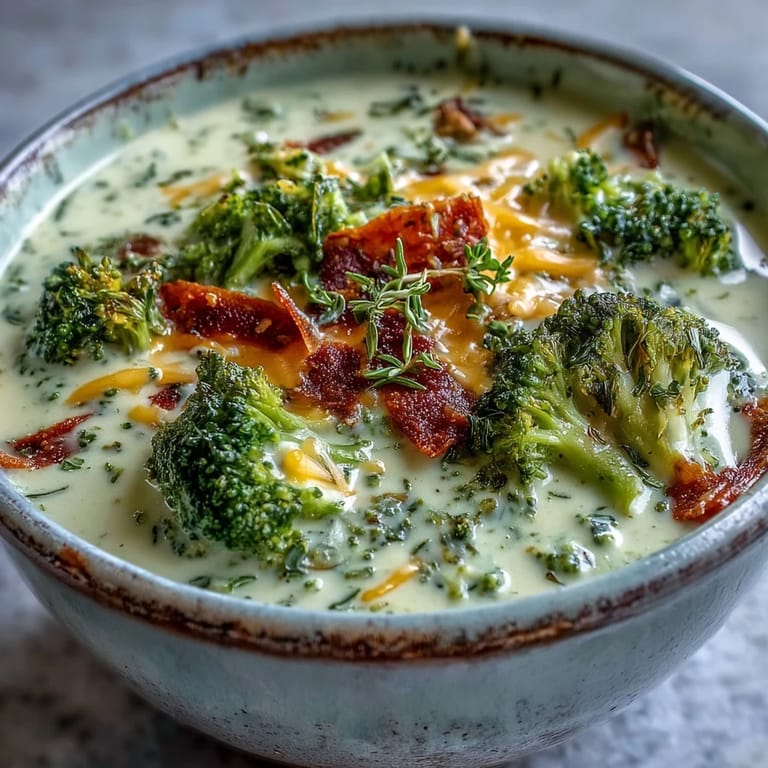
- Sharp cheddar cheese, freshly grated: Grating it yourself matters because pre-shredded cheese contains anti-caking agents that can make the soup grainy instead of silky.
- Unsalted butter: This builds the flavor foundation alongside the olive oil and lets you control the salt level throughout cooking.
- Whole milk and heavy cream: The combination creates a luxurious texture without being heavy; the ratio keeps it rich but still feels like something you could eat two bowls of.
- Low-sodium vegetable broth: Using low-sodium gives you room to season properly without the soup becoming salty as it reduces and the cheese is added.
- Dried thyme, basil, and nutmeg: These three herbs work together to create warmth and depth; the nutmeg is subtle but crucial, appearing in just enough quantity to enhance without announcing itself.
- Olive oil: Two tablespoons total—one for roasting the broccoli to develop its caramelized exterior, one for starting the aromatics in the pot.
Tired of Takeout? 🥡
Get 10 meals you can make faster than delivery arrives. Seriously.
One email. No spam. Unsubscribe anytime.
Instructions
- Roast the broccoli until golden:
- Heat your oven to 425°F and toss broccoli florets with oil, salt, and pepper, then spread them on a baking sheet. They'll need about 20 to 25 minutes, stirred once halfway through, until the edges turn deep golden and the florets feel tender when you press them.
- Build your aromatic base:
- While broccoli roasts, warm oil and butter in a large pot over medium heat, then add chopped onion and diced carrots. Let them soften for 5 to 6 minutes until the onion becomes translucent, then add minced garlic and cook just one minute more so it releases its fragrance without burning.
- Combine and season:
- Add the roasted broccoli to the pot (saving a few florets for garnish if you like), then sprinkle in thyme, basil, and nutmeg. Stir everything together so the herbs coat the vegetables and release their oils.
- Simmer the soup base:
- Pour in vegetable broth and bring it to a boil, then lower the heat and let it simmer gently for 10 minutes. This allows the flavors to meld and the vegetables to become even more tender.
- Blend until smooth:
- Using an immersion blender right in the pot, puree the soup until it reaches your desired smoothness—I like mine completely creamy with no vegetable chunks. If using a countertop blender, work in batches and let the soup cool slightly first, leaving the lid slightly ajar to let steam escape safely.
- Add cream and melt in the cheese:
- Stir in milk and heavy cream, then gradually add freshly grated cheddar while stirring constantly over medium-low heat. The cheese will melt into the warm soup, creating a silky, luxurious texture that coats the back of your spoon.
- Taste and adjust:
- Taste a spoonful and adjust salt and pepper as needed. The broth may have provided some saltiness, and the cheese adds its own, so go slowly and taste between additions.
 Pin to Board
 There was a morning when my daughter came downstairs sick, asked for something warm and comforting, and had three spoonfuls of this soup before admitting she actually felt better. I realized then that a good soup is more than nutrition—it's the embodiment of care in a bowl. Now whenever someone in the house needs tending to, this is what I make first.
Why Roasting Makes the Difference
The moment broccoli hits a 425-degree oven, something shifts in its chemistry. The natural sugars concentrate and caramelize instead of steaming away, creating this nutty, almost toasted flavor that raw or steamed broccoli simply cannot offer. I used to make broccoli soup the traditional way—sautéing everything in the pot—and it was always pleasant but forgettable. Then I tried roasting first, and the soup became something my family actually requested. It's a small step that changes everything, and now I roast almost any broccoli I use.
The Cheese Matters More Than You Think
Sharp cheddar is the right choice here because mild cheddar would disappear into the background, overpowered by the roasted broccoli and herbs. Sharp cheddar announces itself without being aggressive, adding a pleasant tang that keeps the soup from tasting one-dimensional. I learned this after trying three different cheeses in succession, and sharp cheddar won by a landslide—my family couldn't pinpoint why one version tasted better, but they could absolutely taste the difference.
Creative Serving and Storage Ideas
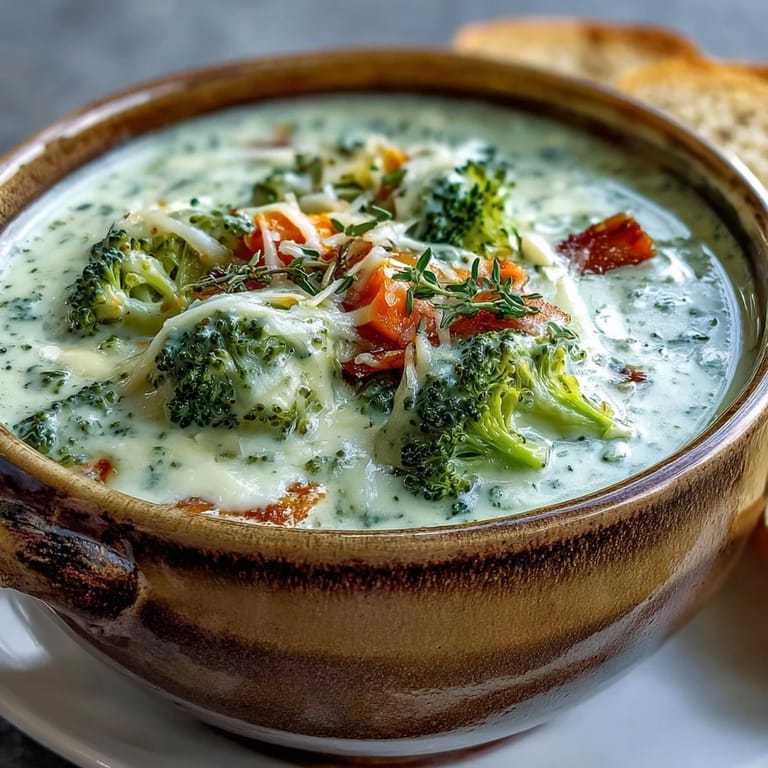
This soup is wonderful served hot with crusty bread for dipping, but I've also found it's excellent chilled on warm days, almost like a creamy broccoli and cheddar gazpacho. It keeps beautifully in the refrigerator for up to four days, and reheats gently on the stovetop over low heat—I add a splash of milk if it thickens too much in storage. For freezing, let the soup cool completely, transfer it to freezer containers leaving an inch of headspace, and it will keep for up to three months; thaw overnight in the refrigerator before reheating.
- A pinch of cayenne pepper stirred in just before serving adds a subtle warmth that makes people wonder what the secret ingredient is.
- Toasted bread crumbs or crispy bacon crumbled on top add textural contrast and make the soup feel restaurant-worthy.
- For a lighter version, swap heavy cream for half-and-half or extra milk, and the soup will still be creamy and delicious.
 Pin to Board
 This soup has become my answer to so many moments—when I need something warm on a cold day, when someone is feeling under the weather, when I want to impress without spending hours in the kitchen. It's a recipe that delivers comfort without complication, and that's exactly what makes it worth returning to again and again.
Recipe Questions & Answers
- → Can I make this soup dairy-free?
Yes, substitute dairy-free milk, cream alternatives, and vegan cheddar cheese. Use olive oil instead of butter for sautéing the vegetables.
- → How do I store leftover soup?
Store in an airtight container in the refrigerator for up to 4 days. Reheat gently on the stovetop, stirring occasionally. Add a splash of milk if the soup thickens too much.
- → Can I freeze this soup?
Yes, though cream-based soups may separate slightly when thawed. Cool completely, freeze in portions for up to 3 months, and reheat gently while stirring to restore consistency.
- → What can I substitute for heavy cream?
Use half-and-half for a lighter option, or add extra whole milk. For a richer texture without cream, increase the cheese slightly or add a tablespoon of cream cheese.
- → Why roast the broccoli instead of boiling it?
Roasting caramelizes the broccoli, developing deeper, nutty flavors and eliminating bitterness. This technique adds complexity that boiled broccoli cannot achieve.
- → Can I add other vegetables?
Absolutely. Cauliflower, potatoes, or celery work well. Adjust cooking times accordingly to ensure all vegetables are tender before blending.