 Pin to Board
 My grandmother used to say that black-eyed peas on New Year's Day weren't just tradition—they were insurance against a year of bad luck. I didn't believe her until I tasted them simmering on her stove, the kitchen filling with smoke from the sausage and the earthy warmth of spices I couldn't name. Years later, I found myself recreating that exact moment, my own pot bubbling away while the smell transported me straight back to her kitchen. There's something about these humble legumes that feels less like cooking and more like keeping a promise to the past.
I made this for a January dinner party once, nervous about feeding eight people something so simple. Someone asked for the recipe before dessert even arrived, then another person, then another. What I realized that night was that simplicity done right—with real ingredients and a bit of patience—beats fancy every single time. That pot became the centerpiece of the evening, not because it looked impressive, but because everyone kept coming back for more.
Ingredients
- Smoked sausage (8 oz): Andouille or Kielbasa gives the entire pot its backbone of flavor—this is where the smoke comes from, so don't skimp on quality.
- Thick-cut bacon (4 oz): Render it slowly to build flavor layers that anchor everything else.
- Dried black-eyed peas (1 lb): Look for peas that are uniform in size so they cook evenly; sort through them by hand to catch any stones that occasionally hide in the bag.
- Onion, bell pepper, celery (the holy trinity): These three vegetables are the flavor foundation of every proper Southern dish—sauté them until they're soft and fragrant.
- Garlic (3 cloves): Add it at the end of the vegetable sauté so it doesn't burn and turn bitter.
- Chicken broth (6 cups) and water (1 cup): The liquid is where all the flavors marry; low-sodium broth lets you control the salt level.
- Bay leaves, smoked paprika, thyme, cayenne: Bay leaves perfume the pot without overpowering; smoked paprika is non-negotiable for authentic depth.
- Fresh parsley and hot sauce: Parsley adds brightness at the end; hot sauce lets each person customize their heat level.
Tired of Takeout? 🥡
Get 10 meals you can make faster than delivery arrives. Seriously.
One email. No spam. Unsubscribe anytime.
Instructions
- Soak the peas overnight (or use the quick method):
- Place dried peas in a bowl and cover with water the night before, then drain and rinse. If you're short on time, pour boiling water over them, let them sit for an hour, then drain—both methods work equally well.
- Render the bacon until crispy:
- Cut it into small pieces and cook over medium heat in your Dutch oven, listening for the sizzle to settle into a gentle crackle. Remove it with a slotted spoon when it's golden and set it aside on a paper towel.
- Brown the sausage:
- Slice the smoked sausage and sauté it in the bacon fat until the edges are caramelized and the smell fills your kitchen. This step deepens the flavor of everything that follows.
- Build the vegetable base:
- Add diced onion, bell pepper, and celery to the pot and let them soften for 5-6 minutes, stirring occasionally. You'll know they're ready when the onion turns translucent and the kitchen smells like home.
- Bloom the garlic:
- Stir in minced garlic and cook for just 1 minute—this wakes up its flavor without letting it scorch.
- Combine everything:
- Add the rinsed peas, broth, water, bay leaves, and all your spices. Return the bacon and sausage to the pot and give everything a good stir.
- Simmer low and slow:
- Bring the pot to a boil, then reduce the heat to low, cover it, and let it bubble gently for 1 to 1.5 hours. The peas are done when they're tender but haven't fallen apart, and the broth has darkened and thickened.
- Taste and adjust:
- Before serving, remove the bay leaves and taste the pot. Add more salt or a pinch of cayenne if you want extra heat, then scatter fresh parsley over the top for color and a fresh note.
 Pin to Board
 There's a moment about halfway through cooking when the kitchen transforms. The smell gets deeper, richer, almost meaty despite being centered around legumes, and you realize why people have been making this dish for generations. It stops being just dinner and becomes something that connects you to every other person who's ever stood in front of a stove with the same ingredients.
Why This Dish Matters in the South
Black-eyed peas have been eaten for centuries, and there's real tradition tied to serving them on New Year's Day. Whether you believe in the luck or not, there's undeniable comfort in a dish that says you're starting the year right, with something nourishing and made with care. The spices and smoke echo the culinary history of the South, where simple ingredients transformed into something memorable.
Making It Your Own
This recipe is flexible in the best ways. Some people add a splash of vinegar at the end for brightness, others stir in diced tomatoes toward the last 20 minutes for texture, and vegetarians swap the sausage and bacon for extra smoked paprika and a generous glug of liquid smoke. The base is solid enough to support your additions without falling apart.
Serving and Pairing Ideas
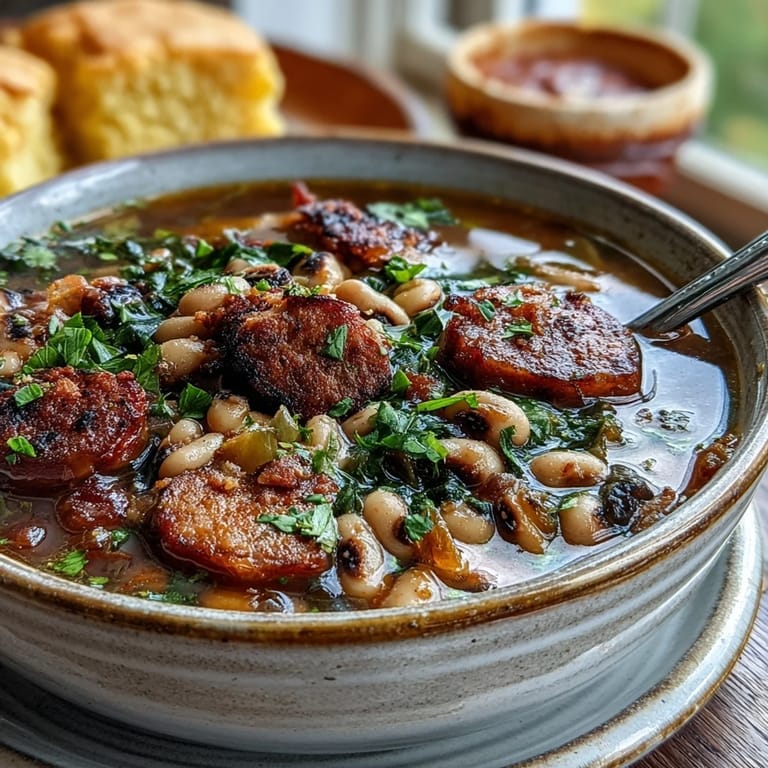
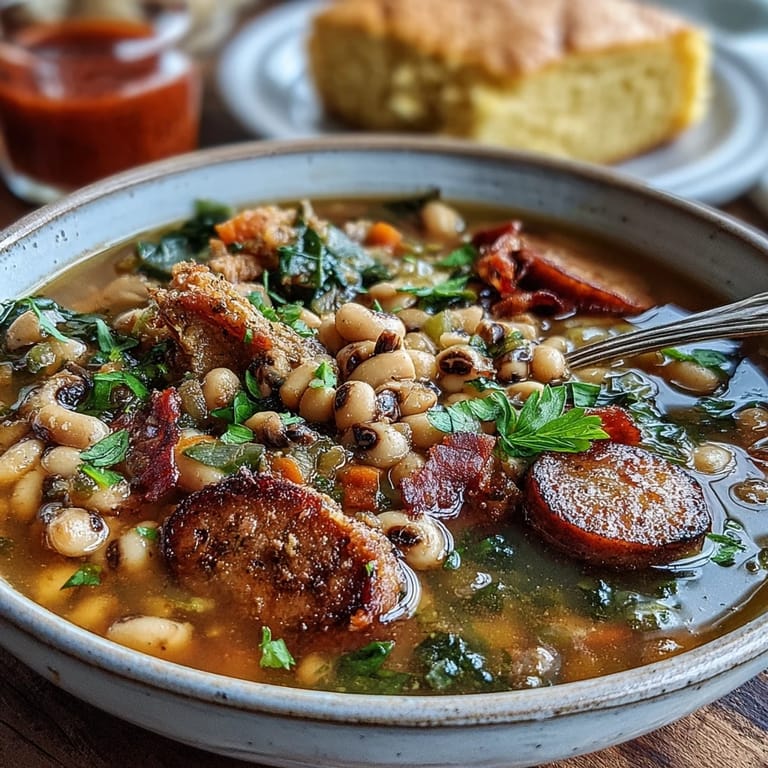
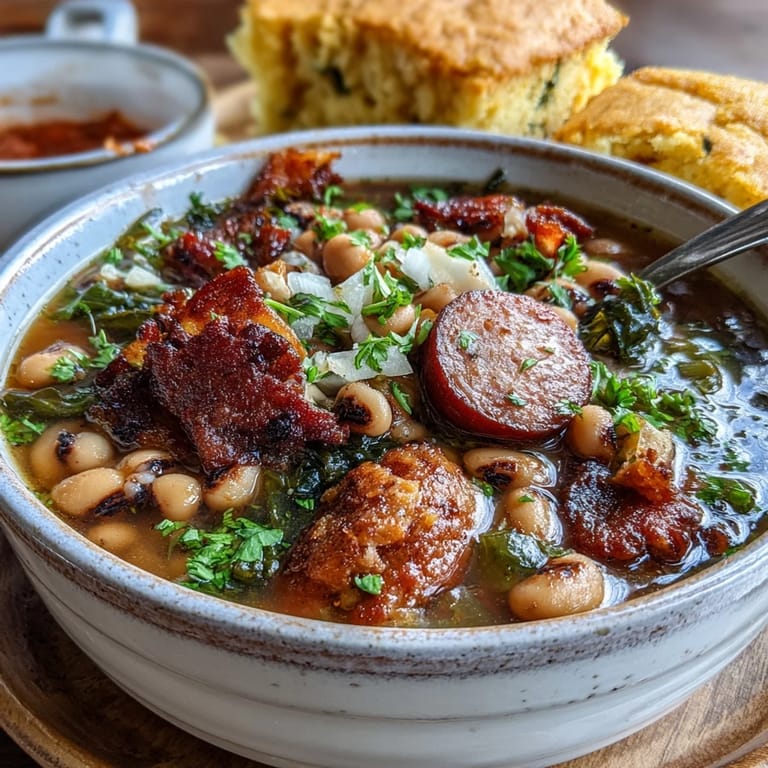
Serve this over steamed white rice or alongside cornbread—the cornbread soaks up the broth in a way that feels almost necessary. A bowl of hot sauce on the side lets everyone adjust the heat to their preference, and crispy collard greens on the plate add a contrast in texture and flavor that keeps you coming back for more.
- Pair with a crisp, dry white wine or ice-cold iced tea to cut through the richness of the meat.
- Make extra and freeze it in portions for nights when you need comfort food fast.
- Leftovers taste even better the next day as the flavors continue to deepen and meld together.
 Pin to Board
 Every time I make this, I'm reminded that the best meals aren't complicated—they're just honest. This pot of black-eyed peas proves that point with every spoonful.
Recipe Questions & Answers
- → Do I need to soak black-eyed peas before cooking?
Yes, dried black-eyed peas require soaking overnight for optimal texture. Alternatively, use the quick-soak method by covering peas with boiling water for 1 hour before cooking.
- → Can I make this vegetarian?
Absolutely. Simply omit the sausage and bacon, use vegetable broth instead of chicken broth, and add extra smoked paprika or liquid smoke to maintain that signature smoky depth.
- → What should I serve with black-eyed peas?
These pair traditionally with steaming hot cornbread or over fluffy white rice. Add sautéed collard greens or kale on the side for a complete Southern meal.
- → How long do leftovers keep?
Store cooled leftovers in an airtight container in the refrigerator for up to 4 days. The flavors actually deepen and improve after a day or two.
- → Can I freeze this dish?
Yes, this freezes beautifully. Cool completely, transfer to freezer-safe containers, and freeze for up to 3 months. Thaw overnight in the refrigerator before reheating.